
Bioturbation: How Life Beneath the Sediment Impacts Lake Water Quality

When it comes to lake and pond management, much of our attention is focused on what we can see: algae blooms, aquatic vegetation, murky water, and floating debris. But some of the most important processes influencing water quality are happening out of sight, beneath the sediment surface.
Lake sediments are far from inactive. They contain complex communities of microorganisms, aquatic insects, worms, and other bottom-dwelling organisms that continuously interact with their surroundings. As these organisms move, feed, and burrow, they disturb sediments and influence the movement of nutrients between the lake bottom and the water column.
This process is known as bioturbation, and it plays an important role in aquatic nutrient cycling, sediment chemistry, and overall lake health. While bioturbation is a natural part of aquatic ecosystems, understanding its impact is especially important in nutrient-rich lakes where sediment nutrients can fuel recurring algae blooms.
What Is Bioturbation?
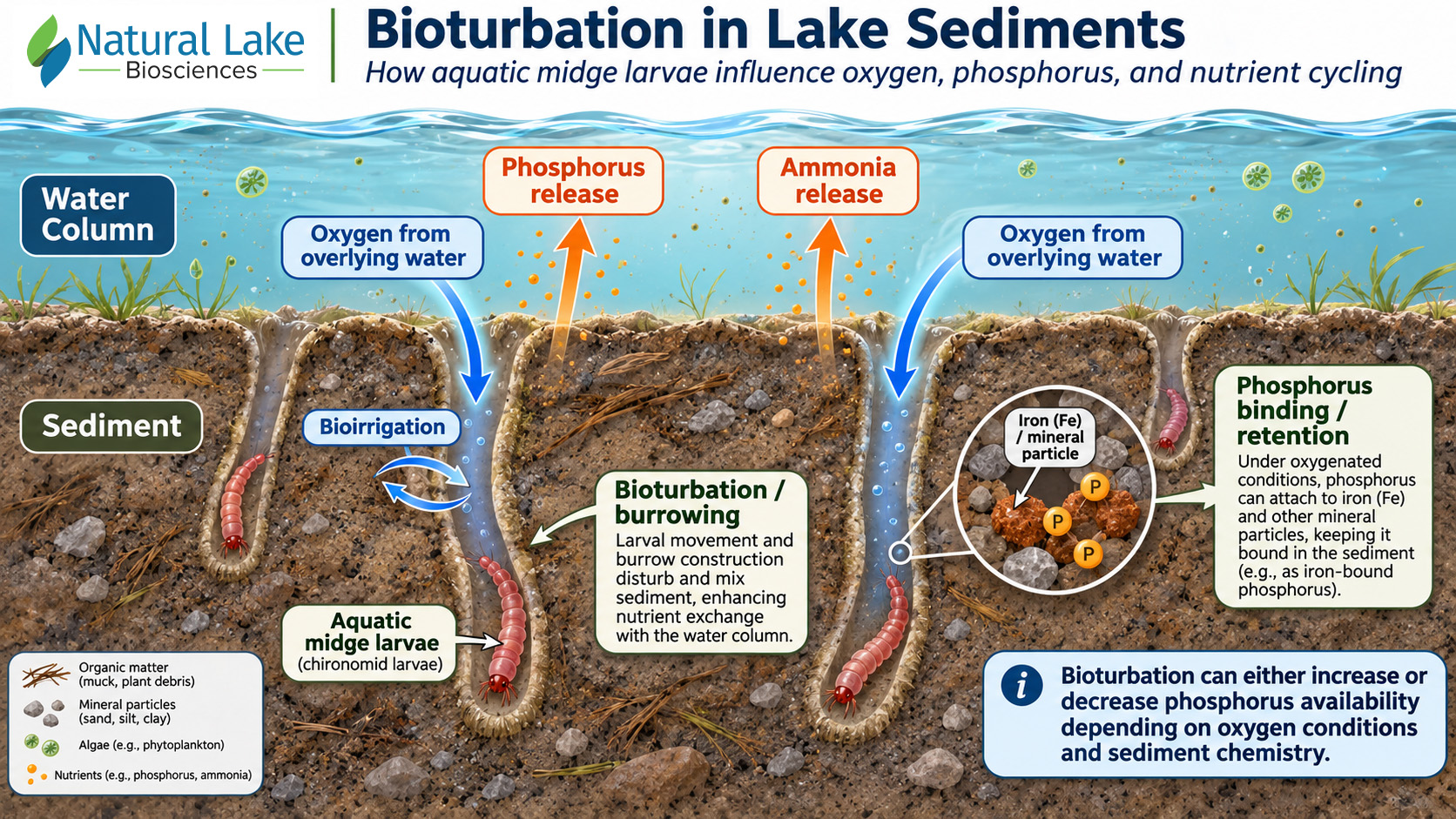
Bioturbation is the physical mixing and redistribution of sediments by living organisms. In aquatic environments, this occurs when bottom-dwelling animals burrow, feed, construct tunnels, or move through sediment. Think of lake sediments as a layered storage system. Over time, organic matter, minerals, and nutrients accumulate in these layers. Some nutrients become buried or chemically bound, while others remain mobile within the sediment. Bioturbation acts like a natural tilling process, mixing these layers and changing how water, oxygen, and nutrients move through them.
Common organisms responsible for bioturbation in lakes and ponds include:
· Aquatic midge larvae (chironomids): Create burrows and circulate water through sediments, influencing oxygen distribution and nutrient exchange.
· Aquatic worms: Move through organic sediments, redistributing particles and stimulating microbial activity.
· Bottom-feeding fish: Species such as common carp disturb sediments while searching for food, often resuspending fine particles.
· Crayfish: Burrow and forage along the lake bottom, changing sediment structure and redistributing organic material.
· Other benthic invertebrates: Certain mayfly larvae and other bottom-dwelling organisms contribute to sediment mixing.
These activities may seem insignificant individually, but across an entire lake bottom, they can substantially influence sediment conditions and nutrient cycling.
How Does Bioturbation Affect Nutrient Release?
One of the most important consequences of bioturbation is its influence on internal nutrient loading. Internal loading occurs when nutrients already stored in lake sediments become available to the overlying water. Bioturbation can influence this release through several mechanisms.
1. Physical Sediment Disturbance
When organisms move through sediments, they can bring previously buried material closer to the sediment-water interface.
Bottom-feeding fish, particularly carp, can also resuspend fine sediment particles directly into the water column.
This disturbance may increase turbidity and expose nutrient-rich particles and pore water to conditions that favor phosphorus release.
2. Increased Exchange Between Sediment and Water
Many benthic organisms construct burrows that allow water to circulate through otherwise undisturbed sediments.
This process, called bioirrigation, increases the exchange of dissolved substances between sediment pore water and the overlying water column.
Depending on sediment chemistry, bioirrigation can transport dissolved phosphorus, ammonia, and other nutrients into the water column.
3. Changes in Oxygen Availability
Oxygen plays an important role in determining whether phosphorus remains bound to sediments or becomes available for biological uptake.
Under oxygen-rich conditions, iron minerals can bind phosphorus and limit its mobility. However, when oxygen becomes depleted and sediments develop reducing conditions, some iron-bound phosphorus can be released.
Bioturbation complicates this relationship.
Burrowing organisms can introduce oxygen into deeper sediment layers, potentially encouraging phosphorus binding. At the same time, their activity can stimulate microbial respiration and increase oxygen consumption.
The overall impact depends on the organisms present, sediment composition, oxygen availability, and existing nutrient conditions.
Ready to look beneath the surface?
Explore Natural Lake Biosciences’ sediment testing services and biological treatment solutions to learn how managing sediment nutrients can support healthier lakes and ponds.
Visit NaturalLake.com to learn more.

About the Author
Landon earned a Bachelor of Science degree from the University of Wisconsin – Madison. He joined the Aquafix team in 2011 and currently leads the Natural Lake Biosciences division. Landon serves on the Board of Directors for the Midwest Aquatic Plant Management Society and is a contributing member of many professional aquatic organizations. He is passionate about using his industry experience and expertise to promote sustainable and effective biological technologies for managing aquatic resources.
Stay Up to Date With The Latest News & Updates
Subscribe Below for Natural Lake Biosciences Updates and Event Invitations!
0 Comments